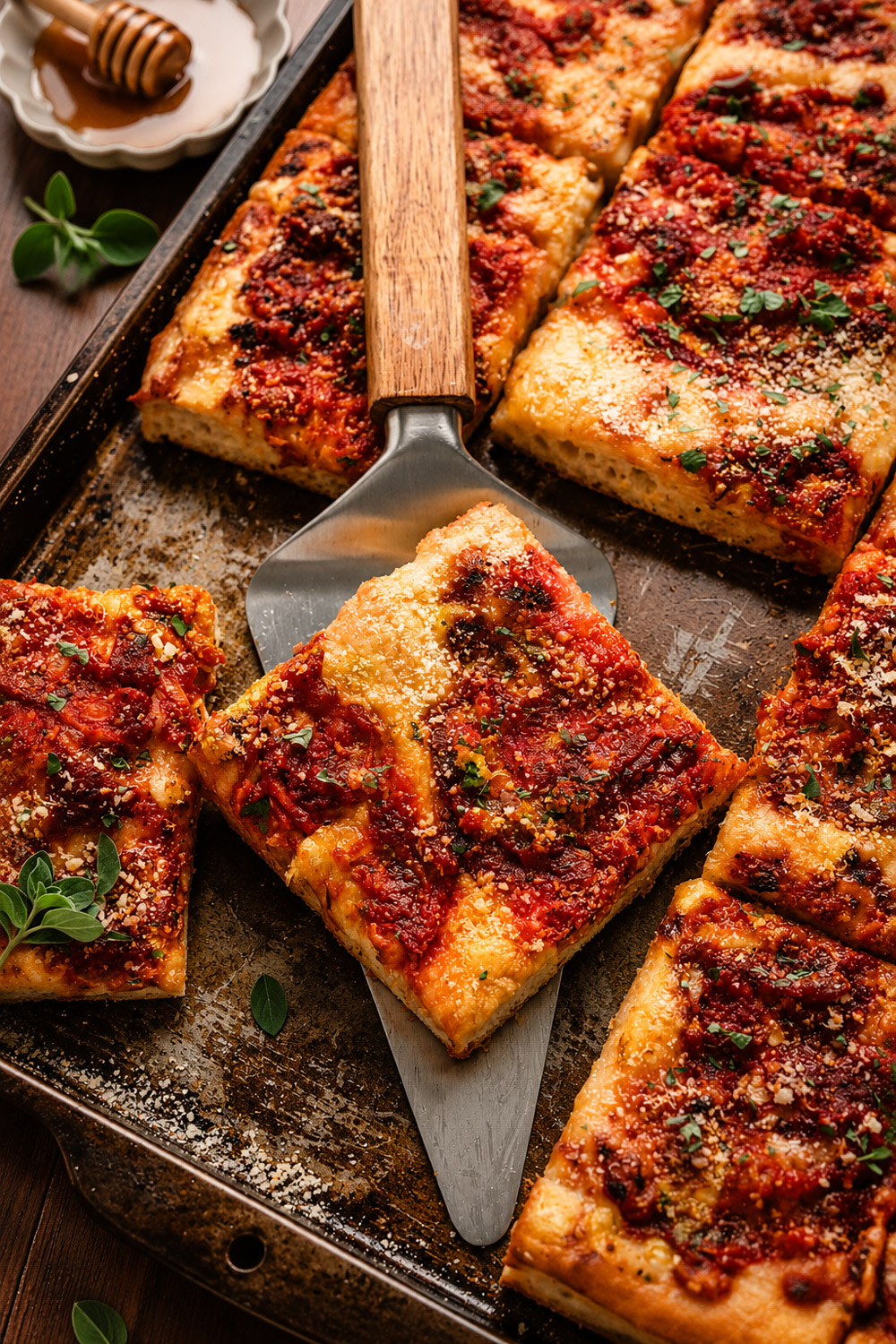
There is something undeniably comforting about a square slice of pizza that strikes the perfect balance between a crackly, golden crust and a vibrant, garlicky sauce. If you have ever wondered what sets a Grandma pizza apart from your standard delivery pie, you are not alone. This home-style treasure has become a pizzeria staple, prized for its rustic charm and intense flavor.
Whether you are looking to replicate your favorite shop experience or dive into a new culinary project, understanding the roots and techniques of this Long Island original is the first step toward pizza perfection.
The History of the Grandma Pie
Grandma pizza is defined by its thin, ultra-crispy square crust, a distinct upside-down topping order, and an aromatic punch of garlic and herbs. Originating in the home kitchens of Italian immigrants in Long Island, New York, this classic pizza was born out of pure resourcefulness.
Because early home cooks lacked professional, high-heat pizza ovens, they adapted their techniques. They discovered that by stretching dough into a standard household sheet pan heavily coated in olive oil, they could achieve professional results in a basic kitchen. It is a testament to the idea that you do not need expensive equipment to produce world-class pizza at home.
Why Grandma Pizza Stands Out
What exactly makes this style so special? It comes down to three defining characteristics that separate it from other sheet pan pizzas like the thicker, more pillowy Sicilian variety.
1. The Fried Crust Bottom
The magic begins with the pan. By baking in a rimmed sheet pan generously coated with extra-virgin olive oil, the bottom of the dough is essentially fried as it bakes. This process yields a deeply golden, intensely crunchy base with signature crisp edges that provide a satisfying snap in every bite.
2. A Thinner, Faster Profile
While Grandma and Sicilian pizzas share a square shape, the Grandma style uses a much shorter proofing time. It bypasses a heavy rise or par-baking, resulting in a thinner, more structured, and crackly bite. It is less about the bread and more about the interplay of texture between the crispy foundation and the savory toppings.
3. The Reversed Layering
In a classic Grandma pie, the order of operations is reversed. To protect the thin crust from getting soggy, sliced or shredded low-moisture mozzarella is laid down directly onto the dough first. The tomato sauce is then ladled randomly over the top in rustic dollops or strips, allowing the moisture to stay balanced while the cheese melts beautifully underneath.
Classic New York Grandma Pizza Recipe
This recipe is designed to be easy to prep while delivering that authentic, crispy pizzeria staple.
- Prep Time: 25 minutes (plus 2 hours rising time)
- Cook Time: 20-25 minutes
- Yield: One 12×16 inch sheet pan pizza (feeds 4-6)
- Difficulty: Easy
Ingredients
For the Dough:
- 3 ¾ cups (450g) All-purpose or bread flour
- 2 tsp Instant yeast
- 1 ½ tsp Kosher salt
- 1 tsp Honey or sugar
- 1 ¼ cups Warm water
- 4 tbsp Extra-virgin olive oil (divided)
For the Toppings & Sauce:
- 1 can (28 oz) Whole peeled San Marzano plum tomatoes (hand-crushed)
- 3 cloves Fresh garlic (finely minced)
- 1 tsp Dried Sicilian oregano
- 12 oz Low-moisture mozzarella cheese (sliced or freshly grated)
- ¼ cup Pecorino Romano cheese (freshly grated)
- 1 handful Fresh basil leaves
- Salt and black pepper to taste
Step-by-Step Instructions
1. Prepare the Dough
Whisk the flour, instant yeast, and kosher salt together in a large bowl. Stir the honey and 2 tablespoons of extra-virgin olive oil into the warm water. Pour the wet mixture into the dry ingredients and stir with a dough scraper or wooden spoon until a shaggy dough forms. Knead the dough by hand on a lightly floured surface for 5 to 7 minutes until smooth and elastic. Shape it into a neat ball.
2. Pan Stretch and Proof
Pour the remaining 2 tablespoons of extra-virgin olive oil into a 12×16 inch rimmed baking sheet, coating the bottom and sides thoroughly. Place the dough ball into the center of the pan and turn it over once to coat it completely in oil. Gently use your fingertips to press and stretch the dough toward the corners of the pan. If the dough springs back, cover it with plastic wrap and let it rest for 15 minutes to relax the gluten, then stretch again. Cover the pan and let the dough rise at room temperature for 1.5 to 2 hours until slightly puffed.
3. Mix the Quick Sauce
While the dough rises, place the whole plum tomatoes into a bowl and crush them thoroughly with your hands to leave a rustic, slightly chunky texture. Stir in the minced garlic, dried oregano, a pinch of salt, and pepper. There is no cooking required for this sauce, which keeps the flavor bright and fresh.
4. Layer and Bake
Preheat your home oven to 450°F (232°C). Evenly lay the mozzarella cheese slices directly over the top of the puffed dough, covering it all the way to the edges. Spoon the seasoned tomato sauce over the cheese in thick, diagonal strips or scattered patches. Dust the top generously with the grated Pecorino Romano cheese. Bake on the lowest rack for 20 to 25 minutes until the bottom is deep golden brown and completely rigid. Remove, scatter fresh torn basil across the top, and let it rest for 5 minutes before slicing into square pieces.
Pro Tips for the Perfect Crunch
To take your Grandma pie to the next level, keep these two tips in mind:
- Avoid Pre-Shredded Cheese: Packaged cheese contains anti-caking starches that interfere with a clean, fluid melt. Buy a block of low-moisture mozzarella and slice it yourself for the perfect fat barrier.
- Choose the Right Pan: Aluminum sheet pans transfer heat exceptionally well. If you have a dark, heavy-duty steel pan, use it to maximize that coveted, crunchy bottom crust.
Whether you are craving a slice that reminds you of a local shop or simply want to master a new kitchen skill, this Grandma pizza recipe provides the perfect roadmap. For more inspiration, you can easily explore top-rated variations from the web or follow this classic guide to get started. If you want to customize your homemade pie, consider trying a long-ferment dough for deeper flavor or adding your favorite regional toppings.