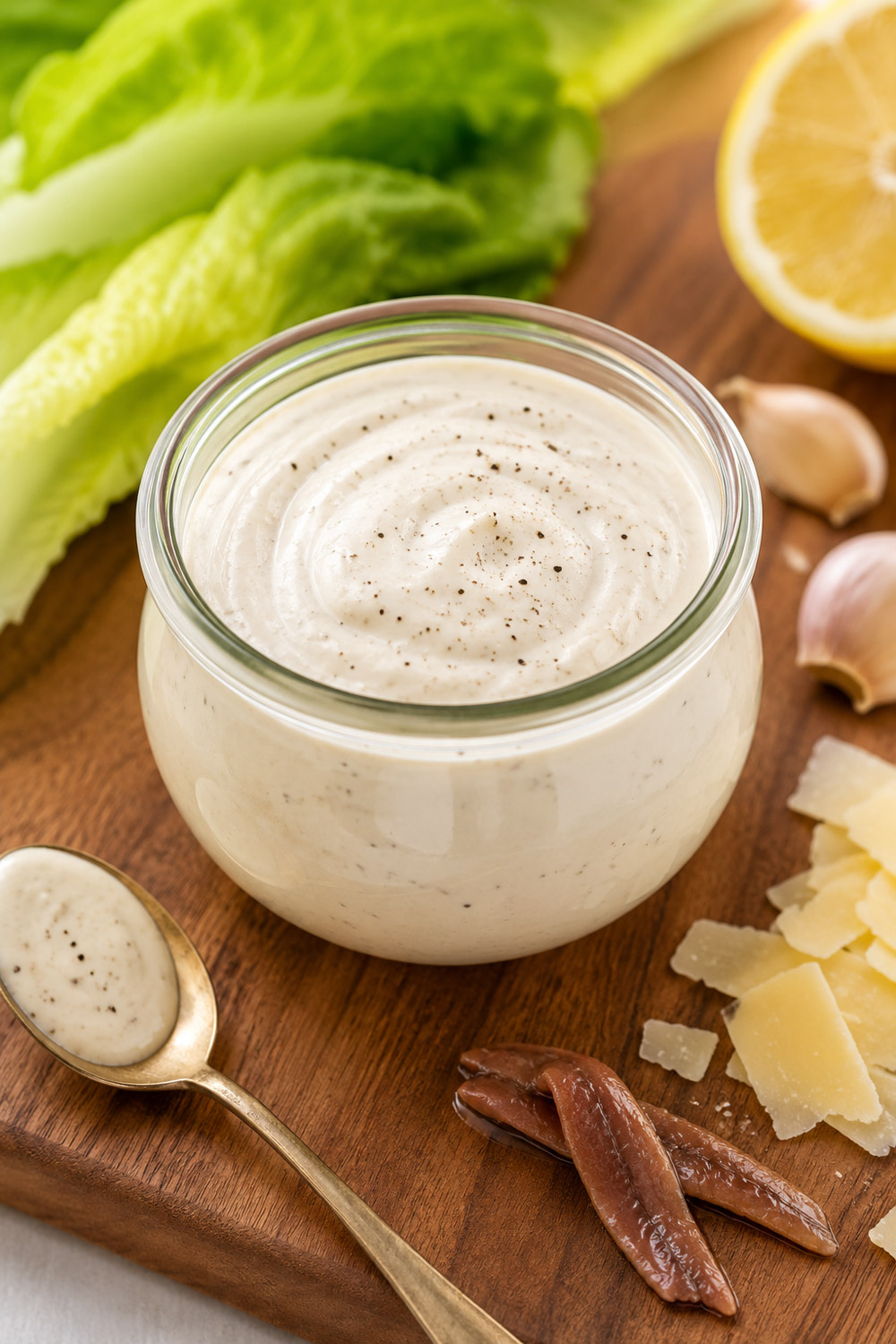
There is a striking difference between a bottle of store-bought Caesar dressing and a batch made fresh in your own kitchen. Mass-produced dressings rely on heavy stabilizers, artificial preservatives, and low-grade oils that dull the sharp, vibrant notes that make a traditional Caesar salad iconic. Making it from scratch at home transforms a simple bed of crisp romaine leaves into a restaurant-quality meal.
Traditional Caesar dressing requires emulsifying raw egg yolks with oil by hand. While that method yields a delicious sauce, it can be intimidating, labor-intensive, and presents food safety concerns regarding raw eggs.
This 5-minute creamy Caesar salad dressing recipe solves every one of those issues by using a high-quality mayonnaise base. Because mayonnaise is already a stable emulsion of egg yolk and oil, it eliminates the risk of breaking or curdling while delivering a rich, velvety texture in a fraction of the time.
Why the Mayonnaise Shortcut Works So Well
Emulsification is the scientific process of forcing two liquids together that normally do not mix, such as oil and lemon juice. In traditional French and Italian sauces, lecithin found in egg yolk acts as the emulsifier.
When you start with commercial or high-quality avocado mayonnaise, the hard work of creating an emulsion is already done. Mayonnaise acts as an instant canvas, holding acidic lemon juice, salty parmesan, and pungent garlic in perfect suspensions.
This shortcut saves time, guarantees a creamy texture every single time, and allows you to customize the flavor balance without worrying about the dressing separating in the fridge.
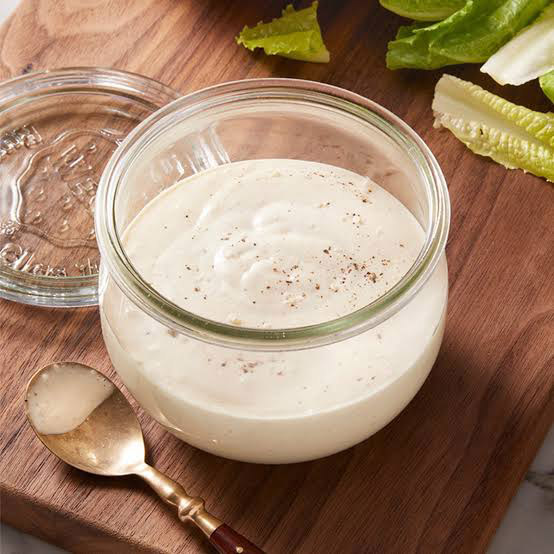
The Ingredients: Flavor Roles and Quality Selection
Every component in this recipe serves a specific culinary purpose. Because there are only a handful of ingredients, quality directly impacts your final result.
Preparation Time: 5 minutes
Yield: 4 to 6 servings (approx. 3/4 cup)
Difficulty: Easy
- High-Quality Mayonnaise (1/2 cup): Choose a full-fat mayonnaise made with real eggs and clean oil. Duke’s, Hellmann’s, or a quality avocado oil mayonnaise work exceptionally well. Avoid sweet sandwich spreads or reduced-fat varieties, as they introduce unnecessary sugars and synthetic gums.
- Freshly Grated Parmesan Cheese (1/4 cup): Pre-shredded cheese in plastic tubs or green canisters is treated with cellulose powder to prevent caking. This anti-caking agent prevents the cheese from melting into the dressing, leaving behind a grainy mouthfeel. Always grate a block of real Parmigiano-Reggiano using a microplane or fine box grater.
- Fresh Lemon Juice (1 tablespoon): Bottled lemon juice lacks the bright, essential oils present in fresh citrus skin and juice. Fresh lemon juice provides the necessary acidity to slice through the richness of the mayonnaise and cheese.
- Fresh Garlic (1 clove): Minced finely or microplaned into a paste. Fresh garlic offers a punchy spicy bite that softens slightly as it sits in the acidic lemon juice.
- Dijon Mustard (1 teaspoon): Dijon provides a sharp, tangy undertone while acting as a secondary emulsifier. It rounds out the richness of the base.
- Worcestershire Sauce (1 teaspoon): A complex fermented condiment that adds deep savory undertones, background acidity, and subtle sweetness.
- Anchovy Paste (1/2 teaspoon): The secret weapon of authentic Caesar salad. Anchovies provide essential umami, depth, and a savory saltiness that cannot be replicated by salt alone.
- Freshly Cracked Black Pepper (1/4 teaspoon): Coarsely ground pepper adds visual contrast and small bursts of heat.
- Kosher Salt (Pinch to taste): Enhances the existing flavors. Go light on the salt initialy, as both Parmesan and anchovy paste carry high sodium levels.
Step-by-Step Instructions
Follow these straightforward steps to prepare your dressing in five minutes.
1. Build the Liquid Flavor Base: 2 minutes.
In a medium glass or stainless steel mixing bowl, combine 1/2 cup high-quality mayonnaise, 1 tablespoon fresh lemon juice, 1 finely minced garlic clove, 1 teaspoon Dijon mustard, 1 teaspoon Worcestershire sauce, and 1/2 teaspoon anchovy paste. Whisk vigorously until the mixture is completely smooth and homogenous.
2. Fold in the Parmesan Cheese: 1 minute.
Add 1/4 cup finely grated Parmesan cheese to the whisked base. Use a whisk or rubber spatula to fold the cheese into the dressing until fully incorporated and velvety.
3. Season and Calibrate Texture: 1 minute.
Whisk in 1/4 teaspoon freshly cracked black pepper and a small pinch of kosher salt. Taste the dressing using a leaf of romaine lettuce rather than a plain spoon. If the dressing feels too thick, whisk in 1 to 2 teaspoons of cool water or additional fresh lemon juice to reach your desired consistency.
4. Chill or Serve Immediately: 1 minute.
The dressing is ready to use immediately. For optimal flavor development, cover and refrigerate for at least 30 minutes before tossing with your salad.
Culinary Science: Balancing Fat, Acid, and Umami
Creating a memorable Caesar salad dressing recipe requires an understanding of how distinct taste profiles interact on the palate.
The Role of Umami
Umami is the fifth taste category, often described as savory or meaty. In this recipe, umami comes from three distinct sources: Parmigiano-Reggiano, Worcestershire sauce, and anchovy paste.
Parmigiano-Reggiano is rich in free glutamate due to its long aging process. Anchovies are packed with inosinate, another umami compound. When free glutamates combine with inosinates, they create a synergistic reaction that multiplies the perceived savoriness of the dish by up to eight times.
The Necessity of Acid
Fat coats the tongue, creating a velvety sensation, but too much fat can make a salad feel heavy and dull. Fresh lemon juice cuts through the oil and cheese, refreshing the palate between bites and highlighting the floral, pungent garlic notes.
Chef Tips for Flawless Dressing
- Taste with Romaine: Always test the dressing on an actual lettuce leaf. Salad dressing eaten off a spoon tastes significantly stronger and saltier than it will once distributed across crisp, water-rich greens.
- Warm the Garlic: If raw garlic feels too harsh or spicy for your taste, microplane the garlic directly into the fresh lemon juice and let it sit for five minutes before adding the mayonnaise. The acid in the lemon juice neutralizes the enzyme that produces raw garlic pungency.
- Achieve the Right Viscosity: A great Caesar dressing should coat the back of a spoon and cling to the ridges of romaine lettuce without pooling heavily at the bottom of the bowl.
Substitutions and Diet Variations
While this classic formulation hits every traditional note, you can adapt the recipe to suit dietary preferences or pantry availability.
Anchovy Alternatives
If you do not have anchovy paste on hand or prefer not to use fish products:
- Whole Anchovies: Use 1 to 2 canned anchovy fillets, mashed into a smooth paste using the flat side of a chef’s knife against a cutting board.
- Capers: Substitute 1 teaspoon of finely chopped capers plus 1/2 teaspoon of caper brine for a briny, plant-based pop of flavor.
- Extra Worcestershire: Increase Worcestershire sauce to 1.5 teaspoons for a light savory undertone without fish.
Dairy-Free or Vegan Caesar
Replace the standard mayonnaise with vegan mayonnaise made from sunflower oil or aquafaba. Swap the Parmesan cheese for 2 tablespoons of nutritional yeast combined with a pinch of garlic powder and sea salt. Use vegan Worcestershire sauce, as standard versions contain anchovies.
Extra Garlic Crunch
For garlic lovers, add 1/2 teaspoon of roasted garlic paste alongside the raw minced garlic. This adds a sweet, nutty backdrop that complements the sharp raw garlic.
Storage and Meal Prep Guidelines
Freshly made mayonnaise-based Caesar dressing stores exceptionally well compared to raw egg preparations.
- Refrigeration: Store the dressing in a sealed glass mason jar or airtight container in the refrigerator for up to 5 days.
- Separation: Because cheese and black pepper are solids suspended in liquid, light separation may occur after chilling. Simply shake the jar or whisk briefly before serving.
- Freezing: Do not freeze this dressing. Freezing breaks mayonnaise emulsions, causing the oil and solids to separate upon thawing into an unappealing texture.
Perfect Pairings: Beyond the Basic Romaine
While crisp romaine hearts, garlic croutons, and shaved Parmesan form the standard foundation, this versatile dressing elevates numerous dishes:
| Dish Type | Preparation Idea | Key Benefit |
| Grilled Chicken Caesar | Sliced marinated chicken breast served over dressed greens | Adds lean protein while slicing through rich grilled notes |
| Seafood Salad | Pan-seared wild salmon or jumbo garlic butter shrimp | Anchovy and lemon notes pair naturally with fish |
| Vegetable Dip | Served alongside raw cucumber, radishes, and sugar snap peas | Thick texture makes an exceptional dip for party platters |
| Sandwich Spread | Spread onto crusty ciabatta for chicken or turkey sandwiches | Replaces standard mayo with rich garlic and cheese depth |
| Grain Bowls | Drizzled over warm farro, roasted chickpeas, and kale | Adds creaminess to hearty fiber-rich bases |
Frequently Asked Questions
Can I make Caesar dressing without anchovies?
Yes. While anchovies provide traditional depth, you can omit them and slightly increase the Worcestershire sauce or add a splash of soy sauce or caper brine to maintain savory complexity.
Why is my Caesar dressing too thick?
Mayonnaise brands vary in density. If your dressing is thicker than desired, whisk in cool water or lemon juice 1 teaspoon at a time until it reaches a pourable consistency.
Is mayonnaise-based Caesar dressing safer than traditional Caesar dressing?
Yes. Commercial mayonnaise is pasteurized, eliminating the risk of salmonella associated with raw unpasteurized egg yolks used in classic recipes.