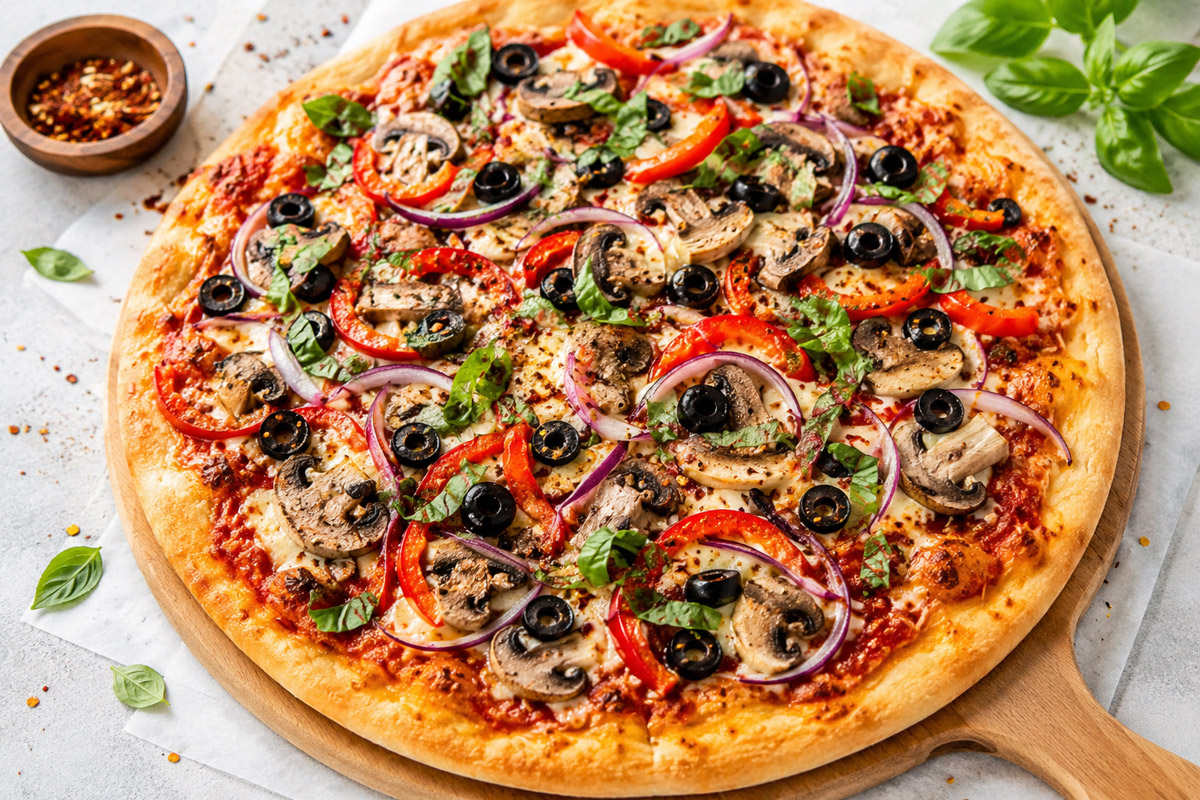
Nothing compares to pulling a blistering, fresh-from-the-oven pizza out of your kitchen. The golden, puffed edges, the bubbling pockets of melted mozzarella, and the vibrant aroma of garlic and basil instantly create that authentic pizzeria atmosphere right at home.
When making a vegetarian pizza, many home cooks run into a common frustration: a soggy, watery crust topped with undercooked vegetables. Because vegetables naturally hold high water content, layering them raw onto a pizza dough often turns what should be a crispy bite into a limp disappointment.
This guide solves that problem. By focusing on moisture management, heat transfer, and balanced layering, you will master an easy vegetarian pizza recipe featuring earthy cremini mushrooms, crisp bell peppers, savory black olives, and juicy cherry tomatoes. Whether you are using store-bought dough on a busy weeknight or stretching homemade dough on the weekend, this master technique guarantees a perfectly crisp, sturdy crust every single time.
The Secret to a Crispy Veggie Pizza Crust
Understanding how heat interacts with wet toppings is the secret to elevating your home pizza game from average to extraordinary.
1. High Heat is Non-Negotiable
Home ovens rarely match the 800°F to 900°F environment of a commercial brick oven, but cranked up to 500°F (260°C), yours can achieve incredible results. High ambient heat rapidly cooks the bottom crust, cooks off steam from fresh vegetables, and caramelizes cheese before the base absorbs excess water.
2. Moisture Control: Slicing vs. Pre-Cooking
Excess moisture is the enemy of a crispy pizza. To keep your crust firm, you have two primary options for vegetable preparation:
- Paper-Thin Slicing: Thinly slice high-moisture vegetables like bell peppers, red onions, and fresh mushrooms. Thin slices lose their moisture quickly in high heat rather than pooling on top of the cheese.
- Pre-Roasting or Sautéing: If you prefer thicker cuts of mushrooms or vegetables like zucchini and eggplant, sauté them briefly in a dry pan or roast them at high heat for 8 minutes before assembling your pizza. This eliminates water content beforehand while building rich, roasted flavors.
3. Layering Architecture
The order of ingredients on your pizza dough determines the final texture:
- Dough: Form the foundation.
- Sauce: Apply a thin, uniform layer (avoid over-saucing).
- Cheese: Lay down the cheese before the vegetables. The cheese acts as a waterproof barrier, preventing vegetable juices from seeping directly into the raw dough base.
- Toppings: Scatter the vegetables evenly over the cheese so air and heat can circulate around every piece.
Key Ingredients and Smart Substitutions
Ingredient Upgrades
| Component | Standard Recipe Choice | Chef Recommended Upgrades |
|---|---|---|
| Dough | Store-bought pizza dough (1 lb) | Overnight cold-fermented dough |
| Base Sauce | Classic garlic-herb tomato | Spicy arrabbiata or basil pesto |
| Main Cheese | Low-moisture mozzarella | Smoked provolone or fontina blend |
| Primary Veggies | Cremini mushrooms & peppers | Sliced shiitake or roasted poblano |
| Savory Accent | Sliced black olives | Kalamata olives or oil-cured olives |
- Dough: Look for raw, fresh dough in the refrigerated section of your local bakery or grocery store rather than pre-baked shells. Allow the dough to sit at room temperature for at least 30 to 45 minutes before shaping. Cold dough springs back and resists stretching.
- Cheese Selection: Always select low-moisture, shredded mozzarella for a classic bake. Fresh mozzarella (the kind packed in water) releases too much liquid unless squeezed and dried thoroughly with paper towels prior to baking.
- Mushrooms: Cremini (baby bella) mushrooms offer a deeper, woodsy flavor and firmer texture than basic white button mushrooms.
- Olives: Classic black olives provide a smooth, mild saltiness. For a sharper, briny kick, swap in Mediterranean Kalamata olives.
Recipe: Easy Veggie Supreme Pizza
- Prep Time: 15 minutes
- Cook Time: 12 to 15 minutes
- Servings: 4
Equipment Needed
- Large baking sheet or pizza pan (or a pizza stone/steel if available)
- Pizza cutter or chef’s knife
- Large cutting board
Ingredients
Base:
- 1 pound store-bought or homemade pizza dough (room temperature)
- ⅔ cup classic pizza sauce (or crushed San Marzano tomatoes with a pinch of salt)
- 1 tablespoon coarse cornmeal or semolina flour (for dusting the baking pan)
Cheese Layer:
- 1 cup (about 4 oz) low-moisture mozzarella cheese, shredded
Vegetable Toppings:
- ½ cup cremini mushrooms, thinly sliced
- ½ cup green bell pepper, thinly sliced into short strips
- ¼ cup red onion, thinly sliced
- ¼ cup black olives, sliced
- ¼ cup cherry tomatoes, halved
Finishing & Optional Garnish:
- Handful of fresh basil leaves
- ¼ teaspoon crushed red pepper flakes
- 1 tablespoon freshly grated Parmesan or Pecorino Romano cheese
- Extra virgin olive oil for drizzling
Step-by-Step Instructions
Step 1: Prep the Oven and Pan
Position your oven rack in the upper third of the oven. Preheat the oven to its maximum temperature, ideally 500°F (260°C). If you are using a pizza stone or steel, place it on the rack now so it thoroughly heats up for at least 30 minutes.
Sprinkle the tablespoon of cornmeal evenly over a large baking sheet or pizza pan. The cornmeal acts like tiny ball bearings, preventing the dough from sticking while adding a pleasant, crunchy texture to the bottom crust.
Step 2: Shape the Dough
Place your room-temperature dough on a lightly floured surface. Pressing from the center outward with your fingertips, gently stretch and shape the dough into a 14-inch circle or oval. Avoid using a rolling pin if possible, as rolling crushes the delicate gas bubbles that create an airy crust.
Transfer the stretched dough directly onto your prepared baking sheet.
Stretching Dough: Center to Outside
Step 3: Layer the Sauce and Cheese
Spoon ⅔ cup of pizza sauce onto the middle of the dough. Using the back of a ladle or spoon, spread the sauce in a spiral motion toward the edges, leaving a clear 1-inch border around the perimeter for the crust.
Scatter the shredded mozzarella cheese evenly across the sauce. Ensure the cheese reaches right up to the border to seal the sauce underneath.
Step 4: Scatter the Vegetables
Distribute the sliced cremini mushrooms, green bell peppers, red onions, black olives, and halved cherry tomatoes over the cheese layer. Spread them out evenly so every slice gets a mix of flavors. Avoid overcrowding or stacking the vegetables in thick piles.
Layer Toppings Evenly
Step 5: Bake to Perfection
Place the baking sheet into the preheated oven. Bake for 10 to 13 minutes.
Watch for two distinct visual cues to know when it is done:
- The outer crust should be deeply golden brown with light charred spots.
- The cheese in the center should be fully melted, bubbling, and slightly browned on top.
Step 6: Finish and Serve
Carefully transfer the hot pizza to a cutting board. Let it rest for 2 minutes so the cheese sets slightly (cutting immediately causes the cheese to slide off).
Garnish with fresh basil leaves, a sprinkle of red pepper flakes, and grated Parmesan. Drizzle a light stream of extra virgin olive oil over the crust edges for a rich shine and flavor finish. Slice into 8 pieces and serve immediately.
Troubleshooting Common Pizza Problems
Problem 1: The Crust is Doughy or Gummy
- Cause: The oven temperature was too low, too much sauce was used, or the pizza was placed on the lowest oven rack away from top heat.
- Solution: Bake at 500°F on the upper rack. Use a light hand with the tomato sauce.
Problem 2: The Vegetables Scorched Before the Crust Cooked
- Cause: The rack was placed too close to the top heating element, or the vegetables were sliced paper-thin without any oil coating.
- Solution: Move the baking rack to the middle position, or toss very delicate toppings (like herbs or thin garlic slices) in a drops-worth of olive oil before placing them on top.
Problem 3: The Dough Keeps Shrinking Back When Stretching
- Cause: The dough is too cold, or the gluten network is over-worked and tense.
- Solution: Cover the dough with a clean kitchen towel and let it rest undisturbed on the counter for 15 to 20 minutes. Relaxing the gluten allows the dough to stretch easily without snapping back.
Creative Topping Variations
Once you have mastered this basic veggie supreme technique, experiment with these distinct flavor combinations:
The Greek Island
- Base: Garlic-infused olive oil (no red sauce)
- Toppings: Baby spinach, chopped artichoke hearts, Kalamata olives, thinly sliced red onion, mozzarella, and crumbled feta cheese added after baking.
The Garden Pesto
- Base: Fresh basil pesto
- Toppings: Sliced cremini mushrooms, yellow squash, roasted red peppers, pine nuts, and goat cheese.
The Spicy Margherita Supreme
- Base: Crushed San Marzano tomatoes
- Toppings: Fresh mozzarella, sliced jalapenos, cherry tomatoes, finished with fresh basil and a drizzle of hot honey.
Quick Flatbread Option
Short on time? You can apply this exact topping configuration to pre-baked naan bread, pita pockets, or flatbreads. Bake at 425°F (220°C) for 7 to 9 minutes until crisp and melted.
Frequently Asked Questions
Can I freeze this pizza before or after baking?
Yes. To freeze before baking, assemble the pizza on a piece of parchment paper, freeze until solid for 2 hours, then wrap tightly in plastic wrap and aluminum foil for up to 1 month. Bake directly from frozen at 425°F for 18 to 22 minutes. To freeze after baking, let the pizza cool completely, wrap individual slices, and freeze. Reheat slices in a 400°F oven or toaster oven for 5 minutes.
What is the best dough to use for beginner pizza makers?
A standard store-bought dough ball from the deli section of your local grocery store is ideal for beginners. It offers great elasticity and flavor without requiring overnight preparation.
How do I make this recipe vegan?
To make this recipe 100% plant-based, substitute the dairy mozzarella with a high-melting vegan mozzarella shred (such as coconut oil or cashew-based mozzarella). Omit the Parmesan garnish or replace it with nutritional yeast or dairy-free Parmesan flakes. Ensure your pizza dough contains no honey or milk solids.