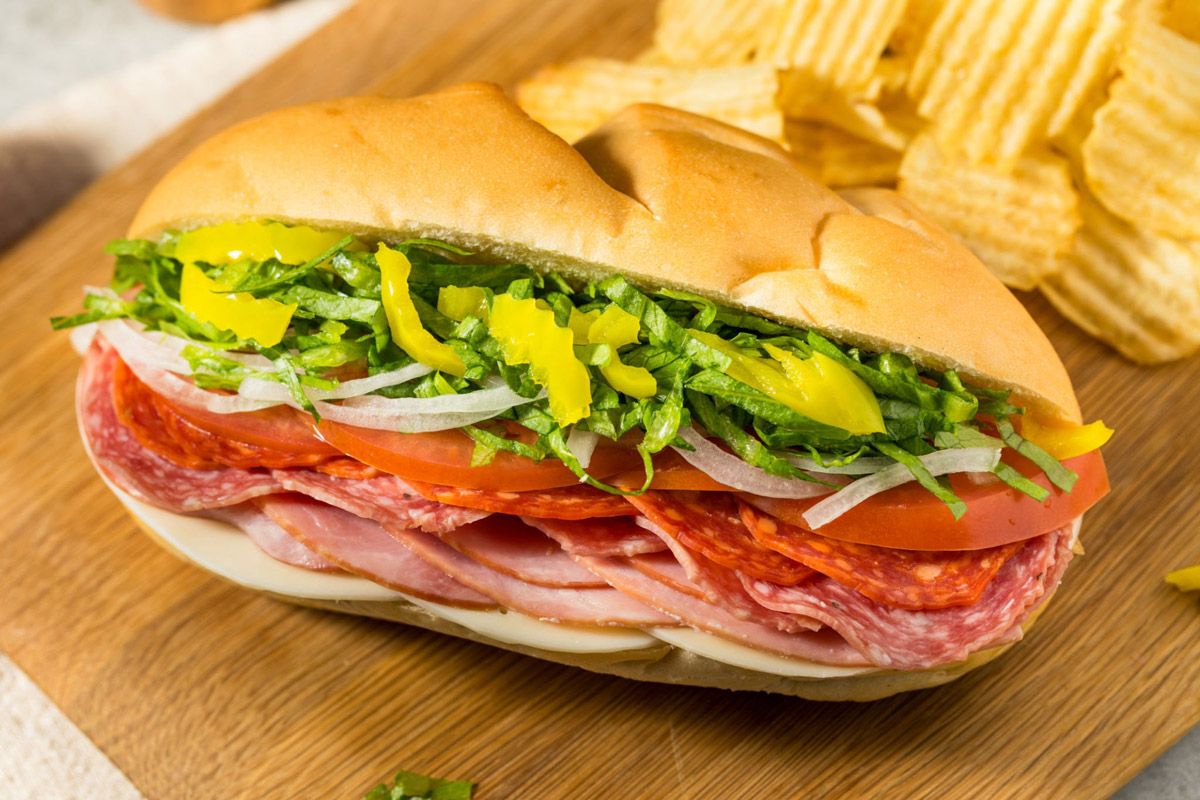
Few culinary creations strike the perfect balance of savory, tangy, crunchy, and rich quite like a traditional deli style Italian sub. Whether you call it a hero, a hoagie, a grinder, or a submarine sandwich, the standard remains the same. A truly great Italian sub relies on a precise layering of high quality cured meats, creamy provolone cheese, fresh garden toppings, and a zesty, vinegar heavy dressing.
Making this legendary sandwich at home requires zero actual cooking, but it does require attention to detail. By understanding how the ingredients interact and how to properly build your layers, you can replicate the exact experience of an old school East Coast Italian deli right in your own kitchen.
Recipe Overview
- Prep Time: 15 minutes
- Cook Time: 0 minutes (No-cook)
- Total Time: 15 minutes
- Yield: 2 servings
- Difficulty: Easy
The Anatomy of an Authentic Italian Sub
To achieve the ideal bite, every component must serve a distinct purpose. You cannot simply throw the ingredients together randomly. The dynamic contrast between the rich, salty fats of the meat and the sharp acidity of the vinegar dressing is what makes this combination iconic. Let us break down the exact shopping list you will need to assemble this masterpiece.
The Bread and Base Spreads
The foundation of any legendary sub is the roll. Look for a large, soft Italian sub roll that measures roughly 12 inches in length. It should possess a tender, pillowy interior capable of soaking up juices, balanced by a slight, golden outer crust that provides just enough structural resistance when you bite into it. Hard, crusty artisanal baguettes will ruin the texture and cause your fillings to slide right out the back.
While purists might debate the inclusion of mayonnaise, it serves a highly functional purpose in a modern deli style sub. A thin layer of mayo adds a baseline level of moisture and acts as an additional fat barrier to keep your bread from becoming soggy too quickly.
The Meats and Cheese
An authentic Italian sub uses a specific lineup of cured meats, each bringing a unique texture and flavor profile to the table:
- Provolone Cheese: Mild or slightly sharp, thinly sliced. It acts as the anchor of the sandwich.
- Genoa Salami: A classic, garlic forward cured pork salami that offers a familiar, savory base.
- Capicola: Also widely known by its Italian American regional pronunciation, gabagool. This is a traditional cured pork neck piece seasoned with hot pepper or spices, adding a deep, complex warmth.
- Mortadella or Deli Ham: Mortadella, the original inspiration for bologna, is laced with delicate cubes of pork fat and pistachios, providing a silky, melting texture. Good quality deli ham offers a clean, salty contrast.
- Pepperoni or Soppressata: Thinly sliced pepperoni or aged soppressata introduces a punchy, paprika infused spice that cuts through the richness of the other components.
The Fresh Toppings
Balance is achieved through raw vegetables and pickled accents. You will need finely shredded iceberg lettuce for maximum crunch and surface area to trap the dressing. Pair this with a ripe, thinly sliced medium tomato and paper thin rings of red onion. For that essential kick of briny heat, pick up a jar of sliced pepperoncini or yellow banana peppers.
The Signature Italian Dressing
Skip the store bought bottled dressings. A true deli sub relies on an oil and vinegar mixture heavily seasoned with dried herbs. You will need high quality extra virgin olive oil, sharp red wine vinegar, plenty of dried oregano, kosher salt, and freshly cracked black pepper.
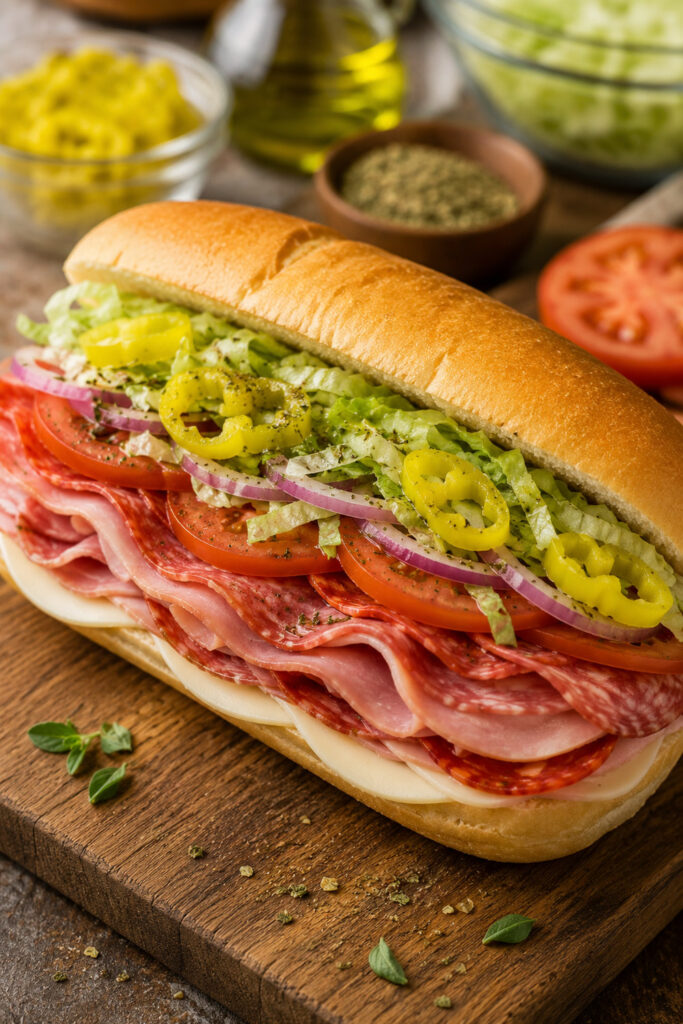
Complete Ingredients List
The Base and Dressing
- 1 large Italian sub roll (approx. 12 inches), soft with a slight crust
- 2 tbsp mayonnaise (optional, but highly recommended for moisture)
- 3 tbsp extra virgin olive oil
- 2 tbsp red wine vinegar
- 1 tsp dried oregano
- Kosher salt and freshly ground black pepper to taste
The Meats and Cheese
- 4 oz provolone cheese, thinly sliced
- 3 oz Genoa salami, thinly sliced
- 3 oz capicola (gabagool), thinly sliced
- 3 oz mortadella or deli ham, thinly sliced
- 2 oz pepperoni or soppressata, thinly sliced
The Toppings
- 1.5 cups iceberg lettuce, finely shredded
- 1 medium tomato, thinly sliced
- 1/4 medium red onion, paper thinly sliced
- 1/4 cup pickled pepperoncini or banana peppers, sliced
Step by Step Assembly Instructions
Follow this structural sequence carefully to prevent a messy, falling apart sandwich.
1. Prep the Bread: Creating the Cavity.
Use a long serrated knife to slice the Italian sub roll horizontally. Do not cut all the way through. Instead, leave a small hinge of bread intact along one side. This hinge acts as a natural safety net to keep your fillings from escaping. Open the roll like a book and scoop out a small amount of the excess soft bread from the center of the top half. This creates a neat cavity that will perfectly cradle your salad toppings later on.
2. Apply the Base Spread: Moisture Barrier.
Evenly spread the two tablespoons of mayonnaise across both of the cut interior sides of the roll. Ensure you coat the bread from edge to edge. This thin layer of fat creates a protective shield that helps stop the upcoming splashes of vinegar and tomato juices from transforming your fresh bread into a soggy mess.
3. Layer the Structural Components: Building the Meat Ribbon.
Place your thin slices of provolone cheese along the bottom half of the roll first. This forms the absolute foundation of your structural build. Next, grab your slices of Genoa salami, capicola, mortadella, and pepperoni. Instead of laying them completely flat like shingles on a roof, gently fold and ribbon each slice onto the cheese. Folding the meats creates tiny air pockets that build height, improve the overall texture, and make the sandwich significantly easier to chew.
4. Stack the Produce: Seasoning the Layers.
Arrange your thin tomato slices directly over the top of the folded meat layers. Immediately sprinkle a pinch of kosher salt and freshly ground black pepper directly onto the tomatoes to draw out their natural sweetness. Follow this by scattering your paper thin red onion slices and the pickled pepperoncini across the tomatoes. Finish the vegetable stack with a generous, overflowing handful of your finely shredded iceberg lettuce.
5. Dress the Sandwich: The Flavor Emulsion.
In a small mixing bowl, vigorously whisk together the extra virgin olive oil, red wine vinegar, dried oregano, and a pinch of salt and pepper until the mixture becomes briefly emulsified. Drizzle this vibrant dressing liberally and directly over the shredded iceberg lettuce and vegetable layer. The lettuce will trap the oil and vinegar, ensuring every single bite contains that bright, punchy deli tang.
6. Press, Wrap, and Serve: The Deli Secret.
Close the sandwich firmly, pressing down gently with the palms of your hands to compress the ingredients together. For a truly authentic deli experience, wrap the entire sub tightly in a sheet of butcher paper or plastic wrap. Let it sit undisturbed on your counter for 5 to 10 minutes before you even think about cutting it. This resting period compresses the layers naturally and allows the fragrant oils and vinegar to marinate into the bread without ruining its integrity. Slice the wrapped sub diagonally across the middle with your serrated knife and serve immediately.
Pro Tips for Customizing Your Sub
Once you master the standard cold counter method, you can easily adapt this recipe to suit your specific cravings or crowd preferences.
If you prefer a warm, melty comfort food option, you can easily transform this into a toasted grinder. To do this, stop after step three. Place the open faced sandwich with its layers of cheese and meat directly under your oven broiler for 2 to 3 minutes until the provolone is completely melted, bubbly, and golden brown, and the edges of the pepperoni turn crisp. Once toasted, proceed to pile on your cold veggies and drizzle the fresh dressing over the top.
For those who enjoy a serious spicy upgrade, consider spreading a thin layer of fiery imported Calabrian chili paste directly onto the top half of the bread along with the mayonnaise. Alternatively, you can swap out the standard mild pepperoncini for a generous spoonful of hot Italian giardiniera, which is a crunchy blend of pickled peppers, celery, carrots, and cauliflower packed in oil.
No matter how you choose to modify the toppings, sticking to the classic principles of texturing your meats and protecting your bread will ensure a perfect sandwich experience every time.