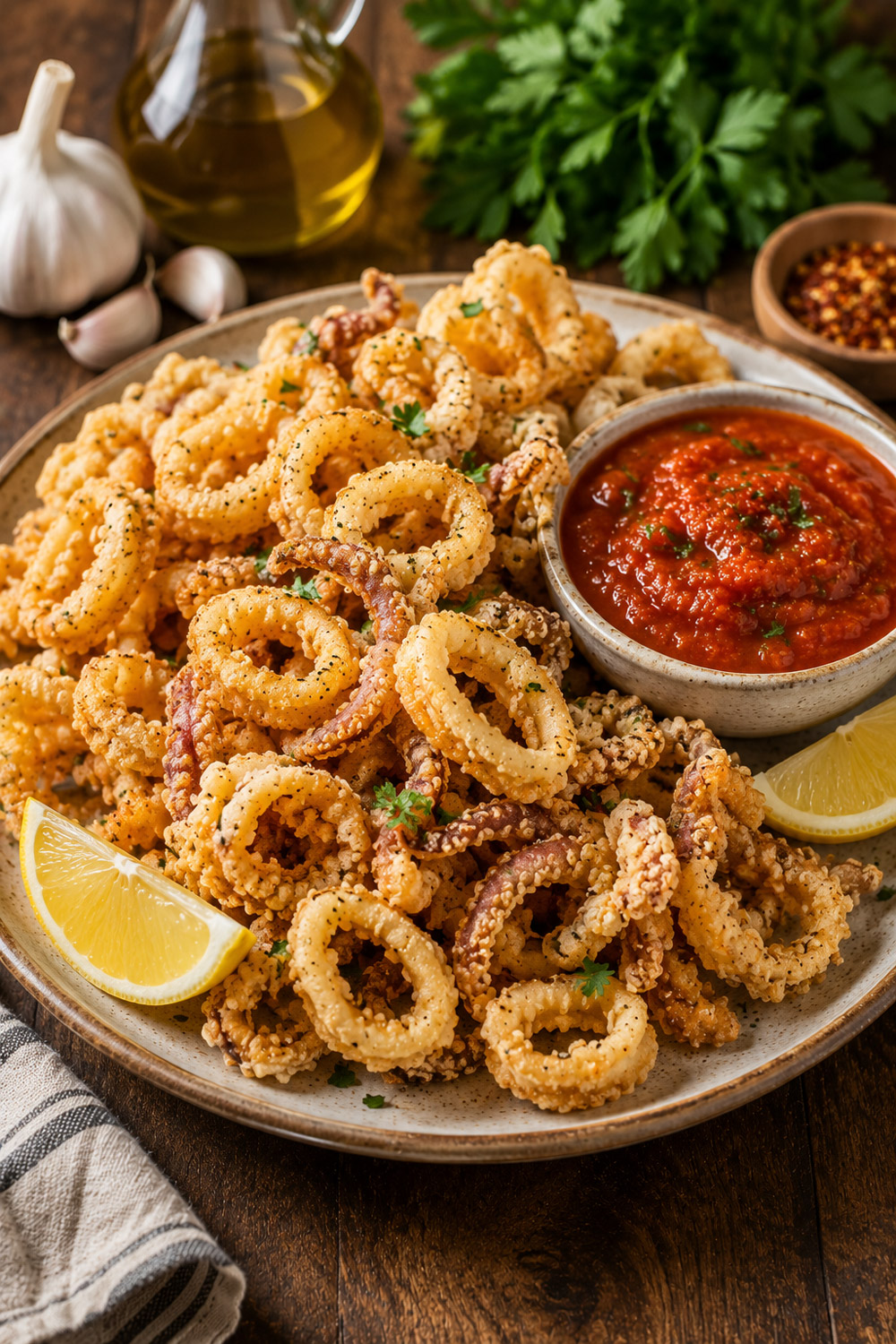
Few appetizers bring the authentic essence of an Italian trattoria or a bustling neighborhood pizza counter quite like a platter of golden, crispy fried calamari. When executed correctly, each bite delivers an unmistakable shatter crunch that gives way to a tender, melt in your mouth interior. Unfortunately, home cooks often encounter two common pitfalls: a soggy, dense coating and a rubbery texture that feels more like a workout for your jaw than a premium seafood treat.
Achieving restaurant quality results at home does not require professional culinary school training. Instead, it relies on simple food science and technique. By combining a targeted tenderizing soak with a lightweight, multi element starch dusting, you can replicate the exact textures found at your favorite local spots, like the house crafted specialties served at Pizza Factory in Carrboro, North Carolina. Paired with a vibrant, slow simmered tomato dipping sauce, this classic pairing is the ultimate crowd pleaser for weekend gatherings or upscale weeknight dining.
The Ultimate Calamari Recipe Profile
Before diving into the kitchen, it helps to understand the foundational blueprint of this seafood classic. Balancing your timing is crucial because squid requires precise heat control to stay delicate.
- Prep Time: 25 minutes (plus 30 minutes for marinating)
- Cook Time: 20 minutes
- Difficulty: Medium
- Servings: 4 people
Ingredients You Will Need
For the absolute best texture and flavor, prioritize fresh seafood and high quality pantry staples. The choice of tomatoes and starches will directly impact the final outcome of your dish.
For the Homemade Marinara Sauce
- 1 can (28 oz) crushed San Marzano tomatoes
- 1/4 cup extra virgin olive oil
- 4 cloves garlic, smashed
- 1/4 cup fresh basil leaves, torn
- 1/2 tsp red pepper flakes (optional, for an extra kick)
- Salt and black pepper to taste
For the Crispy Calamari
- 1 lb fresh calamari (tubes and tentacles), thoroughly cleaned
- 1 cup buttermilk (or regular whole milk)
- 1 cup all purpose flour
- 1/2 cup cornstarch (the ultimate secret ingredient for crunch)
- 1 tsp baking powder
- 1 tsp garlic powder
- 1 tsp smoked paprika
- High smoke point oil for frying (canola, vegetable, or sunflower oil)
- Fresh lemon wedges and chopped Italian parsley for serving
Step by Step Instructions
Follow these chronological steps closely. Managing the transition between the buttermilk bath, the dry dredging station, and the hot oil bath is the key to preventing the coating from falling off or getting heavy.
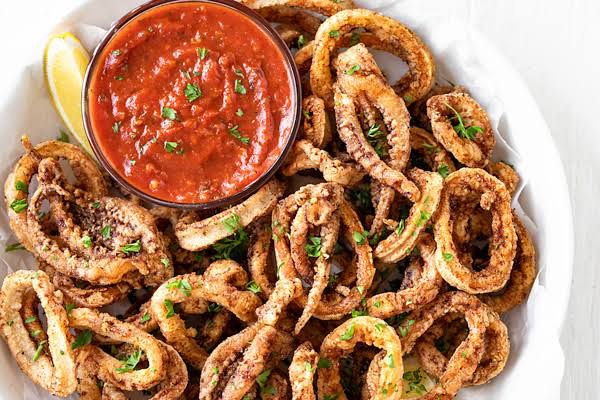
1. Prepare and Tenderize the Calamari: 35 minutes.
Slice your cleaned calamari tubes into crosswise rings roughly 1/2 inch wide. Leave the smaller tentacles whole, as they provide an excellent contrasting texture. Place all the pieces into a large bowl and submerge them fully in the buttermilk. Cover the bowl and refrigerate for 30 minutes. The natural lactic acid in the buttermilk gently breaks down the tough protein fibers, ensuring the squid remains tender rather than rubbery during fast cooking.
2. Cook the Marinara Sauce: 20 minutes.
While the seafood marinates, build your dipping sauce. Heat the extra virgin olive oil in a medium saucepan over medium low heat. Toss in the smashed garlic cloves and optional red pepper flakes, sautéing for roughly 1 to 2 minutes. Watch the pan closely to ensure the garlic becomes fragrant and translucent without browning, as burnt garlic turns bitter. Pour in the crushed San Marzano tomatoes, season with a pinch of salt and black pepper, and stir in the torn fresh basil. Simmer gently on low heat for 15 to 20 minutes until slightly thickened, then reduce the heat to low to keep it warm.
3. Coat the Calamari Batches: 10 minutes.
In a large, shallow baking dish or wide bowl, thoroughly whisk together the all purpose flour, cornstarch, baking powder, garlic powder, smoked paprika, and 1 teaspoon of salt. Lift a handful of the calamari out of the buttermilk, letting the excess liquid drip away. Drop the pieces directly into the flour mixture in small batches. Use your fingers to work the flour mixture between the rings, making sure they separate completely and feature a thorough, dry coating. Toss the coated pieces into a wire mesh strainer and shake gently to remove any excess loose flour before frying.
4. Fry to Golden Perfection: 10 minutes.
Pour 2 to 3 inches of your chosen high smoke point oil into a deep, heavy bottomed pot or Dutch oven. Heat the oil until it reaches a steady 350°F (175°C), verifying the temperature with a reliable kitchen thermometer. Carefully lower a small handful of the dusted calamari into the hot oil. Avoid overcrowding the pot, as too many pieces will cause the oil temperature to plunge, causing the coating to absorb grease and turn soggy. Fry for exactly 2 to 3 minutes until the exterior turns a pale, light golden brown and shatters easily.
5. Drain, Season, and Serve: 5 minutes.
Use a slotted spoon or a wire spider strainer to swiftly lift the fried seafood out of the oil. Transfer the hot pieces directly onto a wire cooling rack positioned over a rimmed baking sheet. Immediately dust the surface with a delicate sprinkle of sea salt while the surface oils are still hot. Repeat the process with your remaining raw batches. Once finished, garnish the pile with freshly chopped parsley and serve immediately alongside the warm marinara sauce and bright lemon wedges.
Pro Tips for Restaurant Quality Success
To elevate this appetizer from a standard home cooked meal to something worthy of a top tier Italian kitchen, keep these core principles in mind:
The Wire Rack Rule
Never drain freshly fried seafood on flat paper towels. The residual heat trapped underneath creates immediate condensation and steam, which rapidly softens the crispy crust you just built. A elevated wire cooling rack allows air to circulate entirely around the rings, preserving that crunch.
- Watch the Kitchen Clock: Squid behaves under strict rules. It must be cooked either ultra fast (under 3 minutes) or slow simmered for a long duration (over 45 minutes). Anything spent in the medium zone, such as 4 to 6 minutes in frying oil, results in an unappealing, tough texture resembling rubber bands.
- The Physics of Crunch: Relying on plain flour creates a heavier, bread like shell. Introducing cornstarch dilutes the gluten formation, while the baking powder reacts to the moisture of the squid, creating microscopic air bubbles. This structural combination yields a delicate shell that shatters beautifully when bitten.
For those looking to customize their next kitchen session, consider adjusting the flavor profiles to match your preferences. If you want a deeper kick, you can easily pivot the dipping options. For instance, increasing the red pepper flakes and adding minced chili peppers transforms the standard tomato base into a fiery Italian fra diavolo companion.
Alternatively, you can pair the warm tomato bowl with a cold garlic aioli or a zesty remoulade sauce to give your guests two completely distinct flavor profiles to enjoy. The balance of hot, crisp seafood with dynamic dips ensures this classic recipe remains a foundational favorite for any menu.