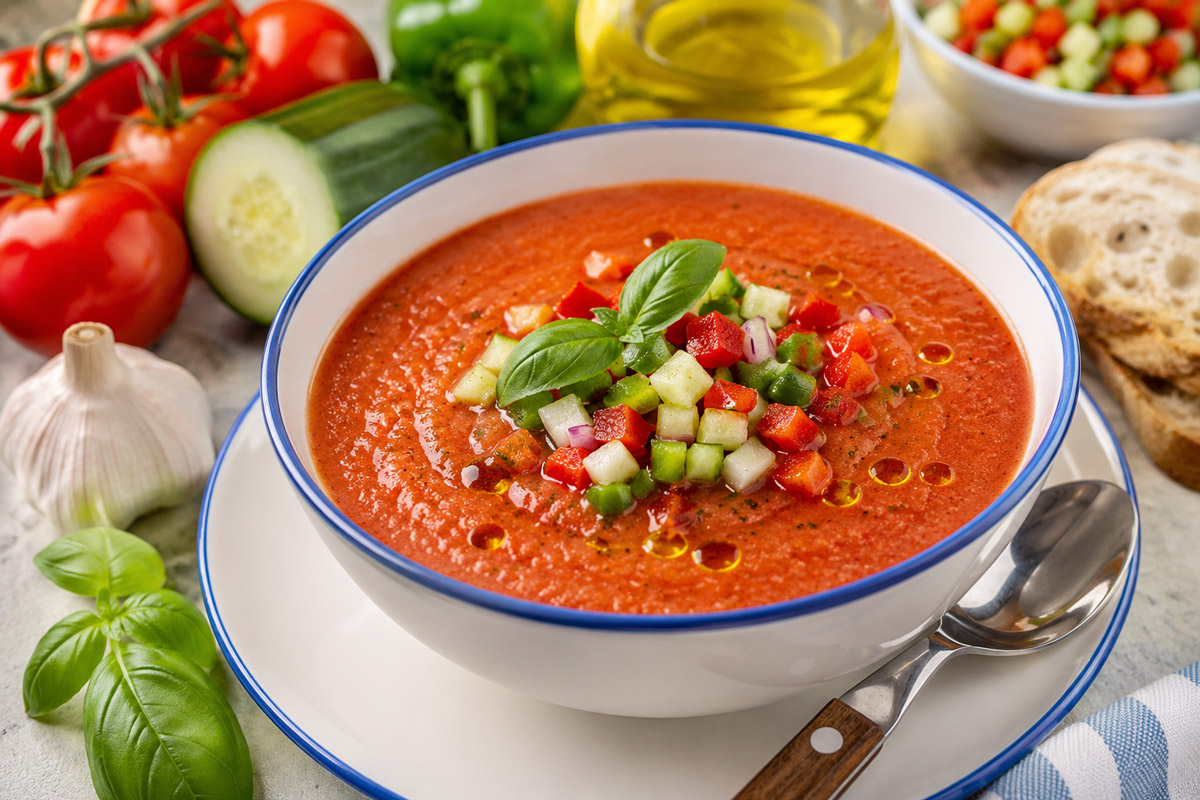
When summer heat hits its stride, few dishes offer the instant refreshment and vibrant flavor of an authentic Andalusian cold soup. A true classic gazpacho recipe does not yield a chunky salsa or a thin glass of vegetable juice. Instead, it creates a silky, velvety emulsion where sweet ripe tomatoes, crisp cucumber, pungent garlic, and peppery green bell pepper fuse seamlessly with rich extra virgin olive oil and tangy sherry vinegar.
Originating from the sun-drenched region of Andalusia in southern Spain, gazpacho began as a humble peasant dish made by pounding bread, garlic, olive oil, and vinegar in a wooden mortar called a dornillo. Once tomatoes and peppers arrived from the Americas, they transformed this traditional staple into one of the world’s most celebrated chilled soups.
The Culinary Secrets Behind Extraordinary Gazpacho
While the ingredient list for gazpacho is wonderfully straightforward, the technique makes all the difference between an average cold soup and a memorable culinary experience.
1. The Emulsification Process
The defining characteristic of traditional Spanish gazpacho is its striking light orange or salmon pink color. This unique shade occurs because of emulsification. When you slowly drizzle high-quality extra virgin olive oil into pureed vegetables at low speed, the fat droplets suspend within the watery vegetable juice. This mechanical process creates a rich, creamy mouthfeel without adding a drop of dairy.
2. Choosing the Right Tomatoes
Your gazpacho will only ever be as good as your tomatoes. Because this is a raw soup, there is no heat to concentrate weak flavors.
- Vine-Ripened or Plum Tomatoes: Look for deep red, heavily scented tomatoes that yield slightly to gentle pressure. Roma or plum tomatoes provide excellent flesh and low acidity, while vine-ripened tomatoes offer sweet juice.
- Heirloom Varieties: Heirloom tomatoes like Brandywine or Cherokee Purple add incredible complexity, though they may slightly alter the traditional bright orange hue.
- Avoid Unripe Tomatoes: Pink, hard, or mealy out-of-season tomatoes will result in a bland, watery soup. If summer tomatoes are not at their absolute peak, wait until they are.
3. The Power of Sherry Vinegar (Vinagre de Jerez)
Acidity balances the natural sweetness of ripe tomatoes and the richness of olive oil. Authentic Spanish gazpacho relies exclusively on vinagre de Jerez (sherry vinegar). Aged in oak barrels, sherry vinegar delivers a nutty, woodsy complexity that white wine vinegar or cider vinegar simply cannot replicate.
4. Debittering the Garlic
Raw garlic can quickly overpower the delicate vegetables and leave a harsh, burning aftertaste. To prevent this, slice your garlic clove in half vertically and pry out the inner green sprout (the germ). Removing the germ eliminates the harsh bitterness while preserving sweet, aromatic garlic flavor.
5. Stale Bread for Traditional Body
Traditional recipes include a small slice of crustless, stale white country bread soaked in water. The softened bread starch binds the water and oil, giving the soup a luxurious texture and stability so it does not separate while resting in the refrigerator.
Gazpacho Recipe Overview
| Key Detail | Specification |
| Prep Time | 20 minutes |
| Chilling Time | 2 hours (minimum), overnight preferred |
| Yield | 4 to 6 servings |
| Dietary Profile | Vegetarian, Vegan (when using classic bread base) |
| Serve Temperature | Ice-cold (38°F to 42°F / 3°C to 5°C) |
Ingredients You Will Need
Primary Produce
- 2 lbs (approx. 900g) Ripe Summer Tomatoes: Cored and coarsely chopped.
- 1 English Cucumber: Peeled and chopped (reserve 2 tablespoons of fine dice for garnish).
- 1 Green Bell Pepper or Cubanelle Pepper: Cored, seeded, and chopped. Italian frying peppers work beautifully here.
- ½ Small Red or White Onion: Chopped.
- 1 Medium Garlic Clove: Peeled, halved, with the green inner germ removed.
Pantry Essentials & Emulsifiers
- 1 Slice Stale White Country Bread: Crust removed, soaked in cold water for 5 minutes, and squeezed dry (optional, for authentic body).
- ¼ Cup High-Quality Extra-Virgin Olive Oil: Choose a fruity, cold-pressed Spanish olive oil like Picual or Arbequina.
- 2 Tablespoons Sherry Vinegar (Vinagre de Jerez): Adjust to taste based on tomato sweetness.
- 1 Teaspoon Kosher Salt: Plus additional to taste.
- ¼ Teaspoon Freshly Ground Black Pepper: Fine grind.
Step-by-Step Preparation Guide
1.Prep the Raw Vegetables: 5 minutes.
Coarsely chop the ripe tomatoes, peeled cucumber, green bell pepper, and onion. Place them directly into the jar of a high-powered blender along with the degermed garlic clove. If using the traditional soaked and squeezed stale bread, layer it in with the vegetables now so it absorbs their juices.
2.Purée until Completely Smooth: 3 minutes.
Blend all vegetable ingredients on high speed for 2 to 3 minutes. Stop once the mixture becomes completely liquid and uniform, with no visible chunks of pepper skin or onion remaining.
3.Emulsify with Olive Oil and Vinegar: 2 minutes.
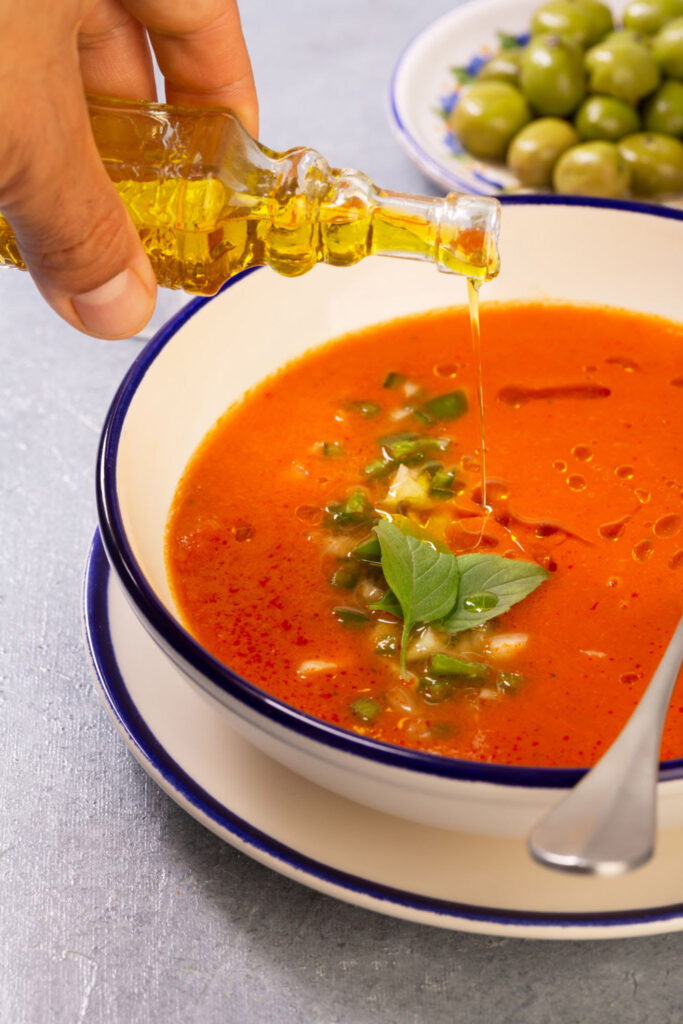
Reduce your blender speed to low. With the motor running, slowly pour in the extra virgin olive oil in a steady stream, followed by the sherry vinegar. Watch as the soup transforms from dark red to a creamy, glowing orange-pink as the oil emulsifies into the liquid.
4.Season and Adjust Balance: 1 minute.
Add the kosher salt and freshly ground black pepper. Pulse briefly to integrate. Taste the soup with a spoon. If your tomatoes are very sweet, you may want an extra splash of sherry vinegar. If too acidic, add another pinch of salt or a small drizzle of extra virgin olive oil.
5.Strain for Restaurant Quality (Optional): 3 minutes.
For an ultra-silky, velvety texture, pour the blended soup through a fine-mesh chinois or sieve set over a large bowl or pitcher. Use a flexible spatula to press the liquid through, discarding the remaining coarse seeds and skin fragments.
6.Chill Thoroughly Before Serving: 2 hours minimum.
Cover the pitcher tightly and refrigerate for at least 2 hours, or ideally overnight. Chilling allows the volatile aromatic compounds to harmonize and deepens the overall flavor profile significantly.
Pro Tips and Flavor Troubleshooting
Texture Adjustments
- If the soup is too thick: Cold temperatures naturally thicken soup as starches tighten. If your chilled gazpacho feels too heavy, thin it down by whisking in a few tablespoons of ice-cold mineral water or low-sodium tomato juice just before serving.
- If the soup feels too thin: You can blend in an extra half-slice of soaked bread or increase the extra virgin olive oil by 1 to 2 tablespoons during emulsification.
Substitute Options
- Vinegar Alternatives: If sherry vinegar is unavailable in your local market, red wine vinegar mixed with a tiny drop of dark port or dry sherry makes a suitable backup. Avoid distilled white vinegar, which is far too harsh.
- Gluten-Free Modification: Omit the bread entirely or replace it with a slice of gluten-free white bread soaked in water. The soup will be slightly lighter in body but remain delicious.
How to Serve Classic Gazpacho
Gazpacho should always be served frost-cold. For the best presentation, chill your serving bowls or glasses in the freezer for 15 minutes before pouring.
Traditional Garnishes
Contrast is essential when serving a velvety cold soup. Top each bowl with:
- Reserved Diced Vegetables: Fine cubes of crisp cucumber and green bell pepper add a delightful crunch.
- Golden Croutons: Homemade pan-fried bread cubes toasted in olive oil.
- Finishing Drizzle: A final swirl of unfiltered, peppery extra virgin olive oil on the surface.
- Classic Spanish Additions: Small dishes of finely diced hard-boiled egg or dry-cured jamón Serrano placed on the table for guests to scatter on top.
Meal Pairings
Pair classic gazpacho with a crisp, chilled Spanish white wine like Albariño or Verdejo, or a bone-dry Fino Sherry. As a meal, it works as a starter alongside grilled garlic prawns, crusty sourdough bread, or a traditional Spanish tortilla.