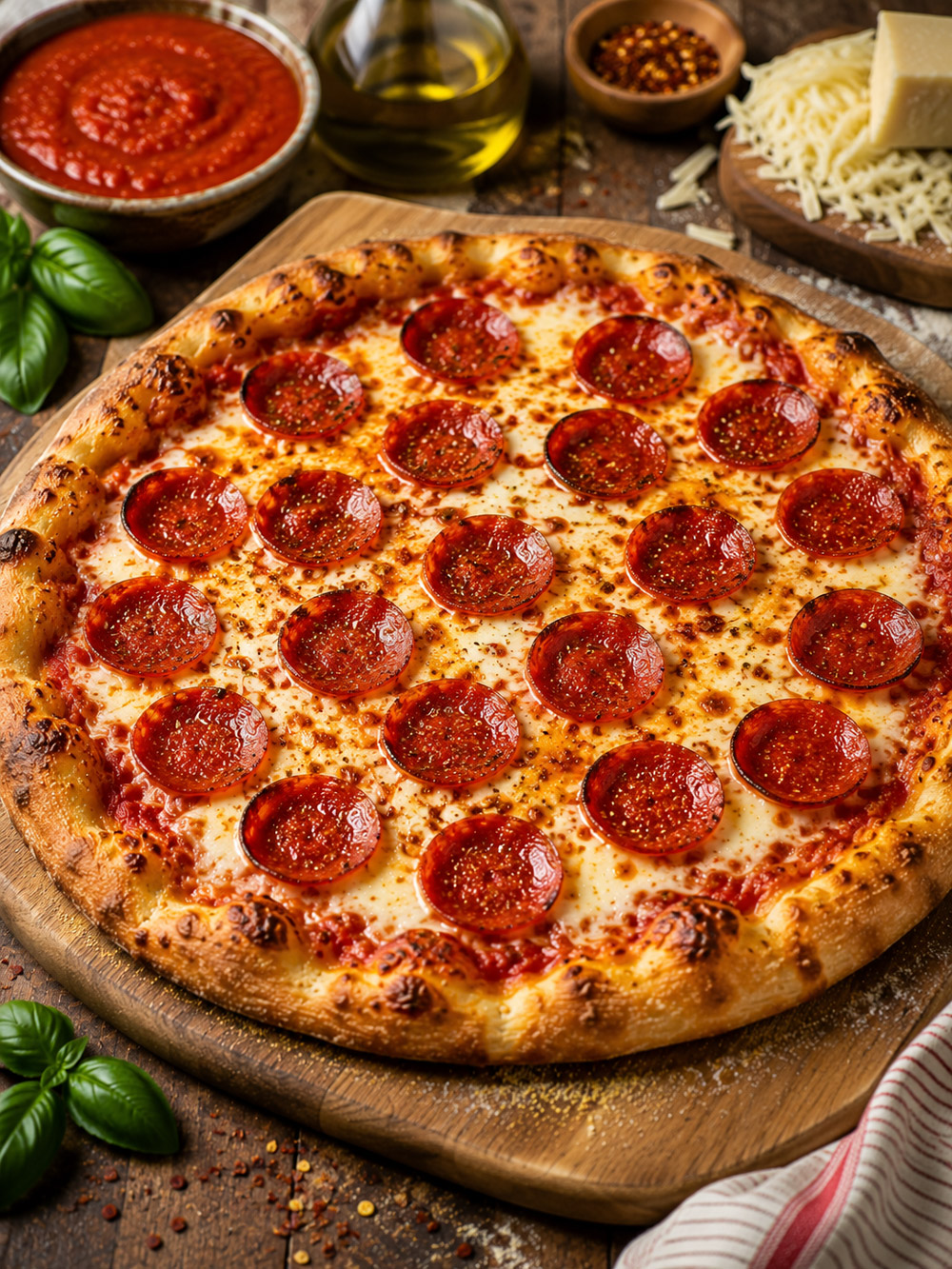
There is a distinct magic in a truly exceptional pepperoni pizza. When you pull a fresh pie out of a scorching hot oven, the sight of bubbling, deeply golden cheese intermingled with crisp, cupped rounds of pepperoni is instantly mouthwatering. A pristine slice offers a symphony of textures: the shattering crunch of the undercrust, the tender chew of the crumb, and the dramatic stretch of low-moisture mozzarella.
While taking a trip down to a beloved local neighborhood spot like the Pizza Factory in Carrboro, North Carolina, is a fantastic way to satisfy a direct craving for a slice made with purpose, replicating that signature pizzeria quality at home is entirely possible. Achieving an authentic, artisanal result in a home kitchen requires understanding a few core culinary mechanics. By mastering temperature control, proper dough handling, and thoughtful ingredient layering, you can elevate a simple weeknight dinner into a spectacular culinary experience.
The Core Ingredients for Pizzeria Quality
The brilliance of a classic pepperoni pizza lies in its simplicity. Because there are so many fewer elements than a loaded supreme pie, every single component must perform perfectly.
Pizza Dough
You will need one standard 12 to 14 inch ball of dough. You can easily source this from a high-quality local grocery store, grab a fresh ball from a neighborhood pizzeria, or prepare a simple overnight fermented dough from scratch. Ensure the dough rests at room temperature for at least one hour before shaping. Cold dough is resistant to stretching and springs back continuously.
Pizza Sauce
A half cup of vibrant, well-balanced tomato sauce provides the necessary acidity to cut through the rich fats of the cheese and meat. Look for a sauce made with crushed San Marzano or plum tomatoes, accented lightly with garlic, dried oregano, and a touch of sea salt. Avoid overly sweet or heavily cooked sauces, as the sauce will cook thoroughly during the intense baking process.
Mozzarella Cheese
For that iconic, photogenic pizzeria stretch, use 1.5 to 2 cups of shredded low-moisture mozzarella. Low-moisture cheese contains significantly less water than fresh, wet mozzarella globes. This characteristic is critical because high moisture varieties will release liquid as they heat, turning your beautiful crisp crust into a soggy, pooled mess. For the absolute best melt and flavor profile, buy a block of whole-milk low-moisture mozzarella and grate it by hand at home. Pre-shredded bags are coated in anti-caking starches that actively inhibit a completely smooth, fluid melt.
Pepperoni
Select 2 to 3 ounces of premium, thinly sliced pepperoni. If you love the look and texture of deeply charred, cupped edges, seek out pepperoni packed in natural casings. As the heat radiates through the meat, the casing shrinks, pulling the edges upward to create small cups that trap the flavorful, spiced oils.
Finishing Touches
Keep a tablespoon of quality extra virgin olive oil nearby to brush the outer rim of the dough, along with two tablespoons of cornmeal or flour to dust your preparation surface and ensure seamless baking transitions.
Step-by-Step Baking Instructions
Cooking a stellar pizza at home is an orderly process where timing and heat management dictate your success. Follow these steps sequentially to achieve optimal results.
1. The Intense Preheat
Your primary goal is to maximize the heat of your domestic kitchen setup. Turn your oven to its absolute highest setting, which is typically 500 degrees Fahrenheit (260 degrees Celsius) or 550 degrees Fahrenheit (285 degrees Celsius). If you own a heavy pizza stone or a professional pizza steel, place it directly on the middle rack before turning the oven on. Let the oven preheat with the stone or steel inside for a minimum of 45 minutes to one hour. This extended period ensures the baking surface stores massive amounts of thermal energy, which instantly transfers to the bottom of the dough to create a beautifully blistered crust.
2. Shaping with Care
Lightly dust a clean, flat workspace with all-purpose flour. Place your room-temperature dough ball in the center. Using the pads of your fingers, gently press down from the middle of the ball outward to push gas bubbles toward the edges. This action creates a distinct, airy rim around the perimeter. Pick up the dough and gently rotate it over the backs of your knuckles, letting gravity do the heavy lifting to pull the dough into a uniform 12-inch circle. Never use a rolling pin for this style of pizza, as rolling completely flattens the internal air pockets, resulting in a dense, cracker-like edge rather than a light, puffy rim.
3. Prepping the Peel
Take an aluminum pizza peel or an inverted baking sheet and dust it evenly with a thin layer of cornmeal or coarse flour. This acts like miniature ball bearings between the metal and the raw dough. Carefully lay your beautifully stretched circle onto the prepared surface. Give the peel a gentle, quick shake forward and backward. The dough must slide completely free. If it sticks anywhere, lift that specific edge and toss a tiny bit more cornmeal underneath before adding any toppings.
4. Assembling the Layers
Use a pastry brush to apply a light coating of extra virgin olive oil along the 1-inch outer border of the crust. This step encourages deep browning and adds a beautiful sheen to the finished product. Ladle a half cup of pizza sauce into the center of the circle, then use the back of the spoon to swirl it outward in a spiral, leaving that oiled 1-inch rim completely clear.
Next, distribute your freshly shredded low-moisture mozzarella evenly across the sauce layer. Finally, lay down your pepperoni slices. Arrange them close together, as they will shrink slightly while baking.
5. The High-Heat Bake
Position the front edge of your pizza peel at the back of the scorching hot pizza stone or steel. Tilt the handle up slightly and use a confident, rhythmic shimmying motion to let the pizza slide smoothly off the peel and directly onto the hot surface. If you are using a standard baking sheet setup, simply place the entire pan onto the middle rack.
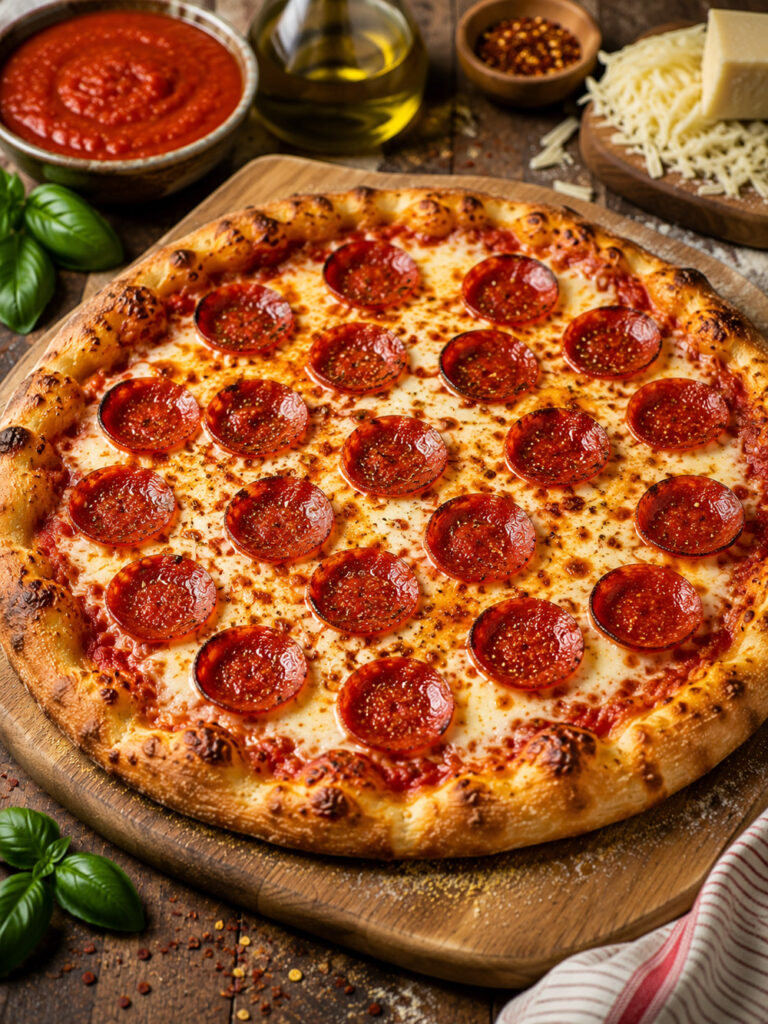
Bake the pizza for 8 to 12 minutes. Keep a close eye on the window. You want the mozzarella to be completely melted, vigorously bubbling, and kissed with occasional brown spots, while the outer crust turns a deep, appetizing golden brown.
6. The Rest and Presentation
Slide your peel under the cooked masterpiece or carefully remove the pan from the oven. Transfer the pie onto a large wooden cutting board. Resist the immediate urge to slice it right away. Allow the pizza to rest undisturbed for 2 to 3 minutes. This brief pause gives the molten cheese an opportunity to set up slightly. If you cut into the hot pie immediately, the liquefied cheese will slide right off the crust, ruining your hard work. After a couple of minutes, use a sharp pizza rocker or wheel to cut the pie into even wedges, then serve it immediately while hot.
Expert Pro Tips for Flawless Results
- Eliminate Excess Moisture and Grease: High-quality pepperoni releases a fair amount of flavorful oil as it bakes. To keep your pizza from developing greasy orange pools in the center, lay your pepperoni slices out on a paper towel and blot them gently before placing them on the cheese. This step keeps the topping exceptionally crisp.
- Avoid Over-Topping: When it comes to traditional style pizza, less is always more. Piling on excessive amounts of sauce or massive heaps of cheese weighs down the dough, preventing the heat from evaporating moisture effectively and leading to a soggy center.
- The Magic Balance: Low-moisture whole-milk cheese is the golden standard. If you want a bit of extra sharpness and depth, try blending your mozzarella with a small handful of freshly grated Provolone or finishing the baked pie with a dusting of aged Parmigiano-Reggiano.
This classic approach yields an incredibly satisfying, authentic meal right from your home oven. It delivers a perfect combination of comfort, crunch, and timeless flavor that is tough to beat.