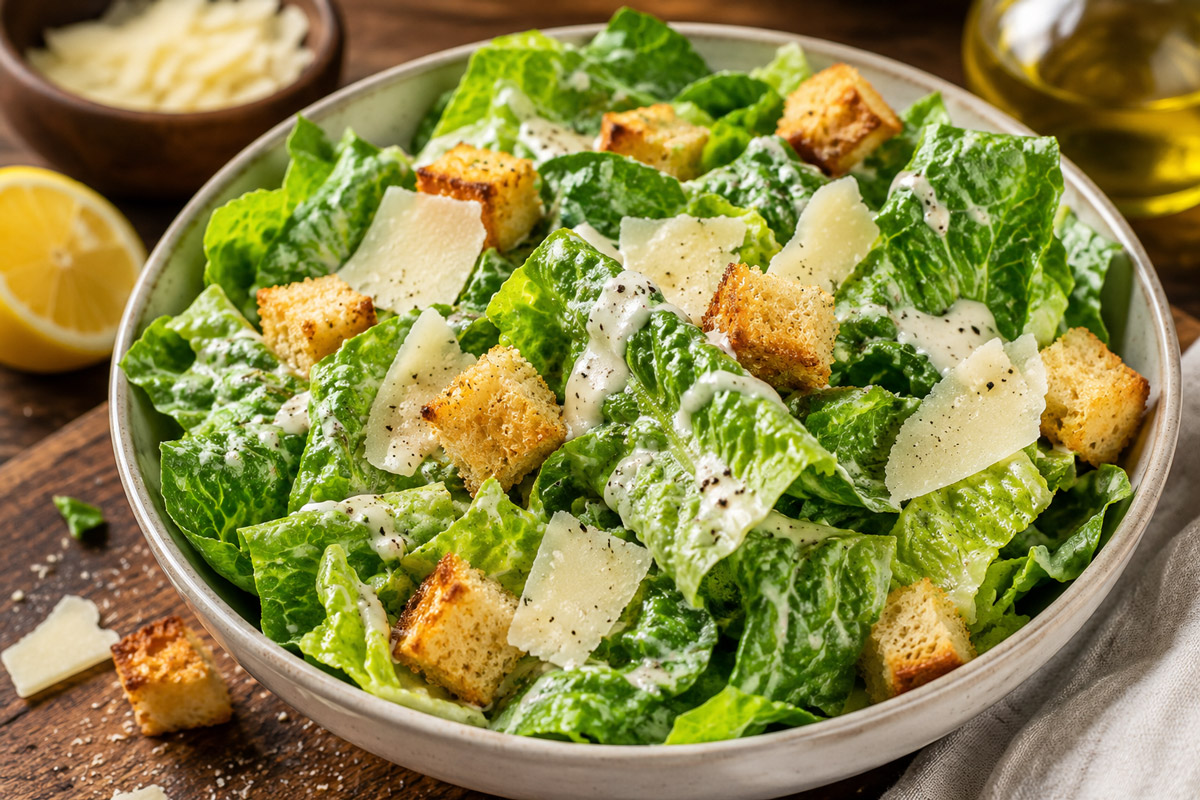
A great Caesar salad is defined by contrast: crisp romaine, warm garlic croutons, and a dressing thick enough to coat every leaf. Most store-bought bottles rely on mayonnaise fillers and artificial thickeners, but the traditional version relies on a simple culinary reaction: emulsifying egg yolks and olive oil with anchovy, garlic, and aged Parmesan.
What Makes a Great Caesar Salad?
The classic Caesar salad was invented in 1924 by Italian-American restaurateur Caesar Cardini in Tijuana, Mexico. His original recipe relied on tableside assembly to keep the ingredients fresh and dynamic.
Recreating that quality at home requires attention to three fundamental components:
- Emulsification structure: The dressing must form a stable suspension. Adding oil too quickly causes it to separate, resulting in a greasy salad.
- Moisture management: Romaine leaves must be entirely dry. Residual water dilutes the dressing and prevents it from clinging to the greens.
- Texture variation: Croutons should be crunchy on the outside but slightly yields in the center, achieved by baking torn bread rather than uniformly cut cubes.
Ingredients Overview
For the Garlic Croutons
- 3 cups crusty bread: Sourdough or ciabatta, torn into 1/2-inch pieces. Torn edges create extra surface area for crisping.
- 3 tbsp extra-virgin olive oil: High-quality oil adds flavor during baking.
- 2 cloves garlic: Finely minced.
- 2 tbsp finely grated Parmesan cheese: Microplaned cheese adheres better to the bread.
- Pinch of kosher salt and black pepper: To taste.
For the Caesar Dressing & Salad Base
- 2 large egg yolks: Preferably pasteurized for food safety.
- 1 clove fresh garlic: Minced into a paste.
- 4 anchovy fillets: Packed in oil, drained and minced (or 1.5 tsp anchovy paste).
- 2 tbsp fresh lemon juice: Brightens the flavor and cuts through the oil.
- 1 tsp Dijon mustard: Acts as a secondary emulsifier.
- 1 tsp Worcestershire sauce: Adds background umami depth.
- 1/2 cup extra-virgin olive oil: Use a mild olive oil to prevent harsh bitterness.
- 1/2 cup Parmesan cheese: Finely grated for the dressing, plus shaved curls for serving.
- 2 hearts Romaine lettuce: Washed, thoroughly dried, and chopped into bite-sized pieces.
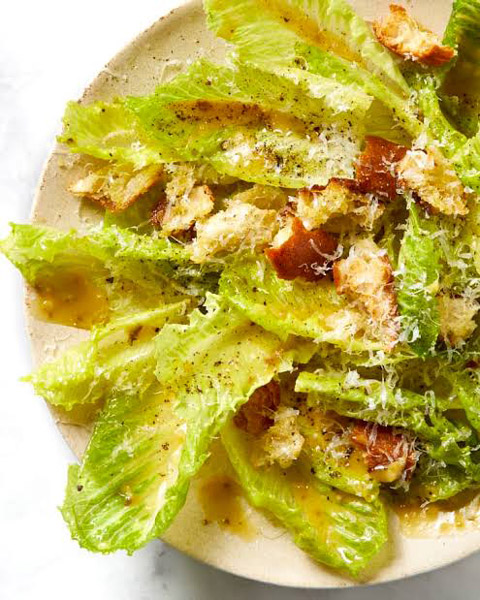
Step-by-Step Preparation
Step 1: Bake the Garlic Croutons
- Preheat your oven to 350°F (175°C).
- In a large mixing bowl, toss the torn bread pieces with the extra-virgin olive oil, minced garlic, and grated Parmesan cheese until evenly coated.
- Spread the seasoned bread pieces across a rimmed baking sheet in a single layer.
- Season lightly with kosher salt and cracked black pepper.
- Bake for 10 to 15 minutes, flipping halfway through, until golden-brown and crisp. Set aside to cool completely before adding to the salad.
Step 2: Whisk the Emulsified Dressing
1.Combine base aromatics: 2 minutes.
In a medium bowl or blender, combine the egg yolks, minced garlic, minced anchovies, fresh lemon juice, Dijon mustard, and Worcestershire sauce. Whisk vigorously until the mixture becomes uniform and slightly pale.
2.Slow-drizzle the oil: 3-4 minutes.
While whisking constantly, add the extra-virgin olive oil drop by drop initially. Once the emulsion begins to form, transition to a very thin, steady stream. The mixture will thicken significantly into a smooth, creamy sauce.
3.Finish with cheese: 1 minute.
Fold in 2 tablespoons of the finely grated Parmesan cheese. Taste and adjust seasoning with freshly cracked black pepper.
Step 3: Assemble and Toss
- Place the thoroughly dried, chopped romaine lettuce hearts into a wide serving bowl.
- Pour roughly two-thirds of the dressing over the leaves. Toss thoroughly using salad tongs or clean hands to ensure every leaf is evenly coated.
- Add half of the cooled croutons and half of the remaining grated Parmesan cheese. Toss gently once more.
- Garnish the top with the remaining croutons, shaved Parmesan, and a final crack of black pepper. Serve immediately.
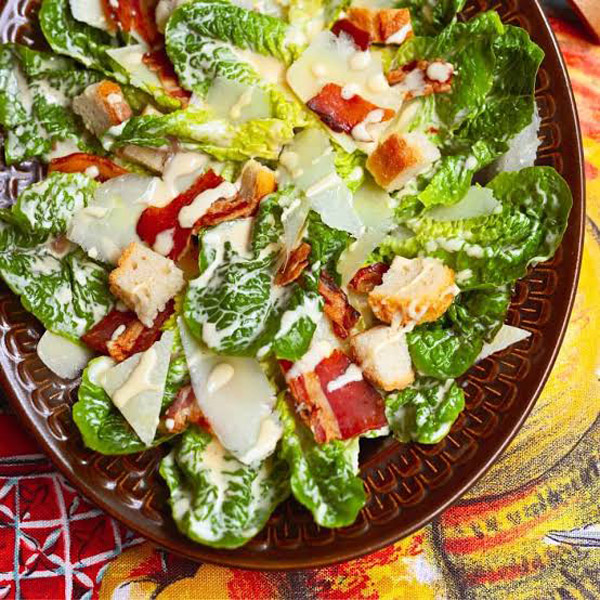
Essential Culinary Techniques
The Science of Emulsification
The classic Caesar dressing relies on an emulsion, which is a suspension of fat droplets within a water-based liquid. Egg yolks contain lecithin, a natural emulsifier that bridges the oil and lemon juice.
Troubleshooting broken dressing: If your dressing breaks (separates into oil and liquid), whisk one teaspoon of warm water and a fresh egg yolk in a clean bowl, then slowly whisk the broken dressing into it to restore the emulsion.
Preparing the Romaine Lettuce
Water is the enemy of oil-based dressings. Even small amounts of rinse water on lettuce leaves create a barrier that causes the dressing to pool at the bottom of the bowl.
- Wash lettuce in cold water to keep cell structures crisp.
- Use a mechanical salad spinner to remove surface moisture.
- Line the bowl with paper towels and chill the dried lettuce in the refrigerator for 20 minutes before dressing.
Common Variations & Substitutions
| Variation | Key Change | Notes |
| Quick Mayo Base | Swap raw yolks and oil for 1/2 cup mayonnaise | Useful if short on time or avoiding raw eggs. Whisk garlic, anchovies, lemon, and mustard directly into the mayonnaise. |
| Anchovy-Free | Replace anchovies with 1 tsp extra Worcestershire or capers | Provides saltiness and depth without fish ingredients. |
| Grilled Caesar | Halve romaine hearts lengthwise and sear on a hot grill for 1-2 minutes | Adds a smoky element to the salad base. |
Storage & Preparation Ahead
- Croutons: Can be made up to 3 days in advance. Store in an airtight container at room temperature. Avoid refrigerating, as moisture softens the crust.
- Dressing: Prepared dressing keeps in a sealed glass jar in the refrigerator for up to 3 days. Whisk briefly before using if any settling occurs.
- Assembled Salad: Must be eaten immediately after tossing. Undressed, prepped romaine can be kept wrapped in paper towels in a sealed container for up to 2 days.